Hong Kong Jockey Club Paves Way for China's Racing Future
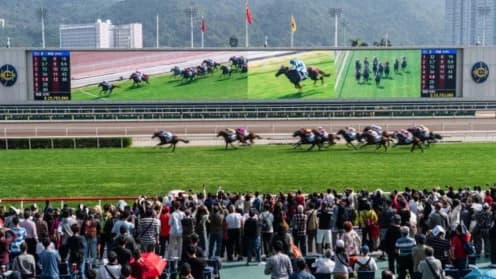
"Embracing a new era of horse racing in mainland China, the Hong Kong Jockey Club leads the way in integrity, training, and infrastructure development, setting the stage for a vibrant racing and breeding industry."
The Hong Kong Jockey Club is establishing itself as a key player in what may become a groundbreaking period for horse racing in mainland China. Chief Executive Winfried Engelbrecht-Bresges asserts that the Jockey Club's initiatives could provide a 'significant boost' to the area, as China makes progress towards creating its own thriving horse racing and breeding sector. This ambition is in line with China's National Equine Industry Development Plan (2020-2025), which seeks to enhance racing standards and eventually launch a pilot horse racing lottery. The development of racing and breeding facilities at Conghua Racecourse offers considerable potential for this initiative.
Conghua Racecourse is central to these aspirations, yet the influence of the Jockey Club reaches beyond that, assisting Chinese officials in improving standards of integrity, equine welfare, and disease control. The development plan outlines a pilot racing system that would be incorporated into the current China Sports Lottery framework—a platform that is presently led by football lotteries and various other games. If horse racing becomes part of this system, it could significantly accelerate the growth of the sport in remarkable ways.
Engelbrecht-Bresges emphasizes that integrity is a fundamental concern, a crucial element for maintaining the credibility of horse racing. He notes the interest shown by senior officials from the mainland, who have expressed a strong desire to learn about Hong Kong's stringent integrity management and apprentice training initiatives. To date, the Jockey Club has trained approximately 800 individuals through its vocational institute, generating significant employment opportunities along the way. These collaborative efforts are merely the initial step of a much larger initiative, with the club dedicated to providing training and technical support to establish a robust foundation in mainland China.
As equine activities grow across the mainland, highlighted by an increase in riding schools from 1,000 to more than 8,000, the need for professional horse racing and veterinary standards has become increasingly clear. In June, the Hong Kong Jockey Club inaugurated a Horse Racing Multi-Function Room at the Guangdong Vocational Institute of Sport, setting the foundation for China's dual-curriculum sports training program focused on horse racing. This progressive strategy underscores the commitment to incorporating world-class standards into China's emerging racing sector.
A significant milestone is on the horizon with the forthcoming quarantine facility in Conghua, which is expected to be operational by 2027. This facility will enable the export of horses from Hong Kong into China, establishing a pathway for elite equestrian and thoroughbred horses to take part in races at renowned locations such as Sha Tin, Happy Valley, and Conghua itself. The creation of a breeding industry within mainland China may follow, potentially leading to regular auctions, collaborations with key industry figures, and a transformed racing market. Engelbrecht-Bresges envisions an engaging future where the Jockey Club and its partners play a vital role in the development of horse racing in China.
In response to China’s increasing interest, the Jockey Club is planning to introduce weekly entertainment and equestrian events at Conghua, scheduled to commence in April 2026. Engelbrecht-Bresges alludes to the development of a state-of-the-art visitor center, with the goal of transforming the Conghua Racecourse into a year-round attraction that immerses guests in the realm of horse racing. By cultivating an ecosystem that merges sports with economic and tourism advantages, the Jockey Club seeks to establish Conghua as a leading horse racing venue, appealing to both local fans and a growing international audience.