"Jayson Werth: From Baseball Star to Horse Racing Champion"
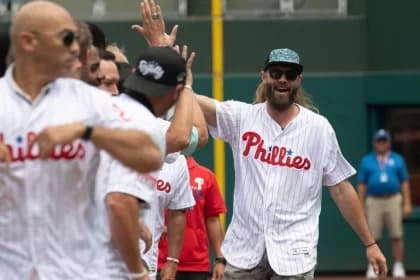
Jayson Werth's inspiring journey from Major League Baseball to horse racing showcases relentless determination, proving that setbacks can lead to triumph. His remarkable Belmont Stakes victory epitomizes resilience, passion, and the pursuit of new dreams.
In the realm of professional sports, few competitors exhibit the level of determination that Jayson Werth has demonstrated, both on the baseball field and in his recent venture into horse racing. His illustrious career, which lasted over ten years in Major League Baseball and was marked by numerous victories and challenges, allowed Werth to discover a new sense of fulfillment and competitive spirit in a sport that has long captivated the ambitions of dedicated athletes: horse racing.
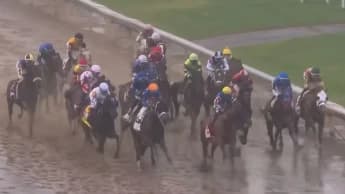
Werth's entry into the world of horse racing was not characterized by immediate success. Similar to many athletes who switch from one intense competitive environment to another, he faced numerous hurdles and skepticism at the outset. However, when his horse, Dornoch, triumphantly crossed the finish line at the Belmont Stakes in a stunning upset that took everyone by surprise, it represented the fruits of years of dedication—both his and the horse's. As Dornoch surged past the other competitors, Werth's emotions erupted. He leaped into the air, shouted with joy, and embraced his family, finally permitting himself to release the tears that had been building up over the years.
This win represented more than just success for Werth as a horse owner—it symbolized the pinnacle of a personal journey that echoed his own challenges in professional sports. Dornoch had faced criticism following a disappointing showing at the Kentucky Derby, much like how Werth had been overlooked throughout his baseball career. However, just as Werth maintained faith in his own potential, he also unwaveringly believed in his horse. When Dornoch crossed into the winner’s circle, it marked a moment of complete validation for both the man and the horse.
To truly grasp the significance of Werth's victory, it is essential to reflect on the pivotal moments that shaped his baseball career. Once considered a promising prospect in the early 2000s, Werth's career took a drastic turn due to a severe wrist injury sustained during spring training in 2005. A fastball broke his wrist, and despite his determination to continue playing, the injury forced him to miss the entire 2006 season. As one of the sport's rising stars, his future suddenly became uncertain.
In December 2006, Werth received a life-altering phone call—he had been released by the Los Angeles Dodgers. After years of hope and hard work, he suddenly felt discarded, overlooked by the very organization that had once recognized his potential. While he wasn't the first athlete to face the harsh realities of professional sports, this moment hit Werth particularly hard. Late into the night, he found himself lost in thought, questioning what his future held. What once felt like a bright and promising path now seemed frail and filled with doubt.
"I was among the leading rookies in baseball in 2004, hitting two home runs during the postseason," Werth remembered. "Everything appeared to be so bright—until it wasn't. You perform well, you sustain an injury, and before you know it, you’re unemployed. So what comes next?"
It didn’t take long for Werth to bounce back, undaunted by the previous setback, as he made his return to the major leagues. He revitalized his career with the Philadelphia Phillies and went on to win a World Series championship. His ability to persevere became a defining characteristic of his baseball journey. However, after hanging up his cleats, Werth looked for new ways to test himself—finding a natural fit in the world of horse racing.
With a long-standing interest in the sport, Werth made the decision to become a horse owner, beginning with Dornoch. The colt's challenging debut at the Kentucky Derby was a disappointment, yet Werth recognized the horse's potential. He refused to allow that initial setback to cloud his judgment. Having experienced being sidelined himself, he was able to empathize with the horse's situation. In many ways, Dornoch's path reflected his own—confronting challenges, defying expectations, and ultimately achieving success.
In horse racing, much like in baseball, there are no certainties; there is only the promise of competition and the determination to achieve success. Werth's triumph at the Belmont Stakes transcended being a mere victory—it represented the fulfillment of a long-held aspiration, showcasing his steadfast faith in himself and in the animals he supports. His baseball career was founded on diligence and resilience, and similarly, his enthusiasm for horse racing is rooted in those same qualities.
Jayson Werth's victory at the Belmont Stakes will be seen as a significant moment of redemption, yet it certainly does not mark the end of his journey after baseball. In the realm of horse racing, he has discovered a fresh avenue for his competitive nature—a setting where the risks are substantial and successes are achieved through hard work and perseverance. In many respects, Dornoch's triumph is just as much a testament to Werth's own strength as it is to the colt's. The similarities are evident: just as Werth did not allow himself to be defined by the challenges he faced in his baseball career, Dornoch emerged from anonymity to claim his well-deserved moment of triumph.
For Werth, the excitement of competition remains ever-present—whether on the baseball field or in the winner’s circle. As he stands there with his family, tears in his eyes, it is clear that he has discovered a renewed sense of purpose in the realm of horse racing—a purpose that rivals even the peak moments of his remarkable baseball career.